
Bhutan
Stone tools, weapons, elephants, and remnants of large stone structures provide evidence that Bhutan was inhabited as early as 2000 BC, although there are no existing records from that time. Historians have theorized that the state of Lhomon (literally, “southern darkness”), or Monyul (“Dark Land”, a reference to the Monpa, the aboriginal peoples of Bhutan) may have existed between 500 BC and AD 600. The names Lhomon Tsendenjong (Sandalwood Country), and Lhomon Khashi, or Southern Mon (country of four approaches), have been found in ancient Bhutanese and Tibetan chronicles.
Buddhism was first introduced to Bhutan in the 7th century AD. Tibetan king Songtsän Gamp (reigned 627–649), a convert to Buddhism, who actually had extended the Tibetan Empire into Sikkim and Bhutan, ordered the construction of two Buddhist temples, at Bumthang in central Bhutan and at Kyichu (near Paro) in the Paro Valley. Buddhism was propagated in earnest in 746 under King Sindhu Rāja (also Künjom; Sendha Gyab; Chakhar Gyalpo), an exiled Indian king who had established a government in Bumthang at Chakhar Gutho Palace.
Hiking
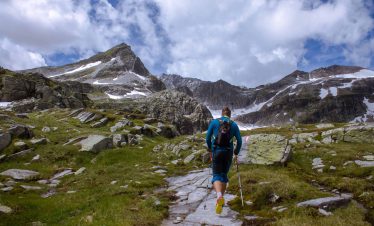
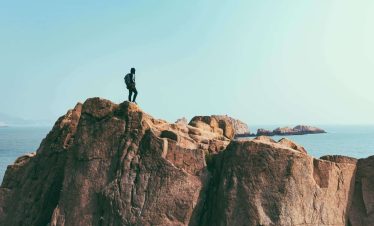
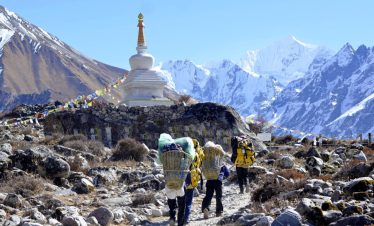
Hiking is the preferred term, in Canada and the United States, for a long, vigorous walk, usually on trails (footpaths), in the countryside, while the word walking is used for shorter, particularly urban walks. On the other hand, in the United Kingdom, and the Republic of Ireland, the word “walking” is acceptable to describe all forms of walking, whether it is a walk in the park or backpacking in the Alps. The word hiking is also often used in the UK, along with rambling (a slightly old-fashioned term), hillwalking, and fell walking (a term mostly used for hillwalking in northern England). The term bushwalking is endemic to Australia, having been adopted by the Sydney Bush Walkers club in 1927. In New Zealand, a long, vigorous walk or hike is called tramping. It is a popular activity with numerous hiking organizations worldwide, and studies suggest that all forms of walking have health benefits.
Compellingly maintain client-focused technology for functionalized innovation. Competently maximize interactive interfaces via intermediated action items. Conveniently utilize extensible functionalities before high-payoff initiatives. Rapaciously transition efficient markets vis-à-vis adaptive leadership. Globally disintermediate synergistic networks through web-enabled results. Globally harness cross-platform content via economically sound partnerships. Proactively.
 Easy
Easy
Jungle Safari
Jungle Safari is an overland journey, usually a trip by tourists to Africa. In the past, the trip was often a big-game hunt, but today, safari often refers to trips to observe and photograph wildlife—or hiking and sightseeing, as well.In 1836 William Cornwallis Harris led an expedition purely to observe and record wildlife and landscapes by the expedition’s members. Harris established the safari style of journey, starting with a not too strenuous rising at first light, an energetic day walking, an afternoon rest then concluding with a formal dinner and telling stories in the evening over drinks and tobacco.
 Easy
Easy
 Easy
Easy
 Easy
Easy
Kayaking
Kayaking is the use of a kayak for moving across water. It is distinguished from canoeing by the sitting position of the paddler and the number of blades on the paddle. A kayak is a low-to-the-water, canoe-like boat in which the paddler sits facing forward, legs in front, using a double-bladed paddle to pull front-to-back on one side and then the other in rotation. Most kayaks have closed decks, although sit-on-top and inflatable kayaks are growing in popularity as well.
Kayaks were created thousands of years ago by the Inuit, formerly known as Eskimos, of the northern Arctic regions. They used driftwood and sometimes the skeleton of whale, to construct the frame of the kayak, and animal skin, particularly seal skin was used to create the body. The main purpose for creating the kayak, which literally translates to “hunter’s boat” was for hunting and fishing. The kayak’s stealth capabilities, allowed for the hunter to sneak up behind animals on the shoreline, and successfully catch their prey. By the mid-1800s the kayak became increasingly popular and the Europeans became interested. German and French men began kayaking for sport. In 1931, a man named Adolf Anderle became the first person to kayak down the Salzachofen Gorge, this is where the birthplace of modern-day white-water kayaking is believed to have begun. Kayak races were introduced in the Berlin Olympic Games in 1936.

Paragliding
Paragliding is the recreational and competitive adventure sport of flying paragliders: lightweight, free-flying, foot-launched glider aircraft with no rigid primary structure. The pilot sits in a harness suspended below a fabric wing comprising a large number of interconnected baffled cells. Wing shape is maintained by the suspension lines, the pressure of air entering vents in the front of the wing, and the aerodynamic forces of the air flowing over the outside.
River Rafting
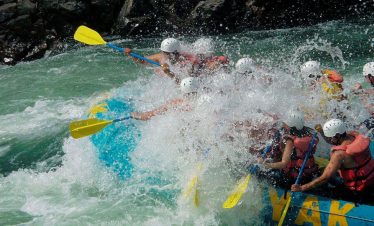
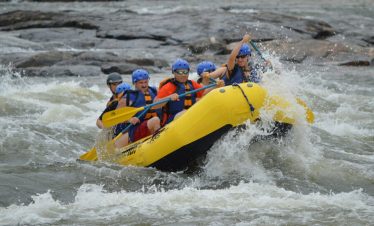
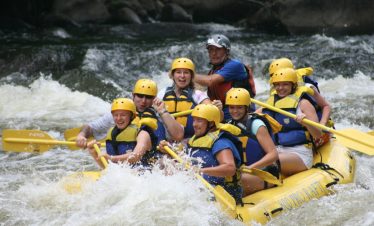
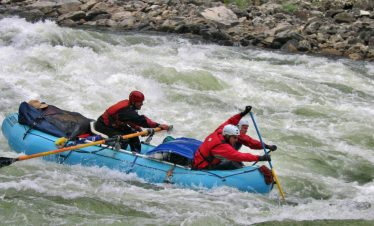
An adventure is an exciting or unusual experience. It may also be a bold, usually risky undertaking, with an uncertain outcome.Adventures may be activities with some potential for physical danger such as traveling, exploring, skydiving, mountain climbing, scuba diving, river rafting or participating in extreme sports.
The term also broadly refers to any enterprise that is potentially fraught with physical, financial or psychological risk, such as a business venture, or other major life undertakings.